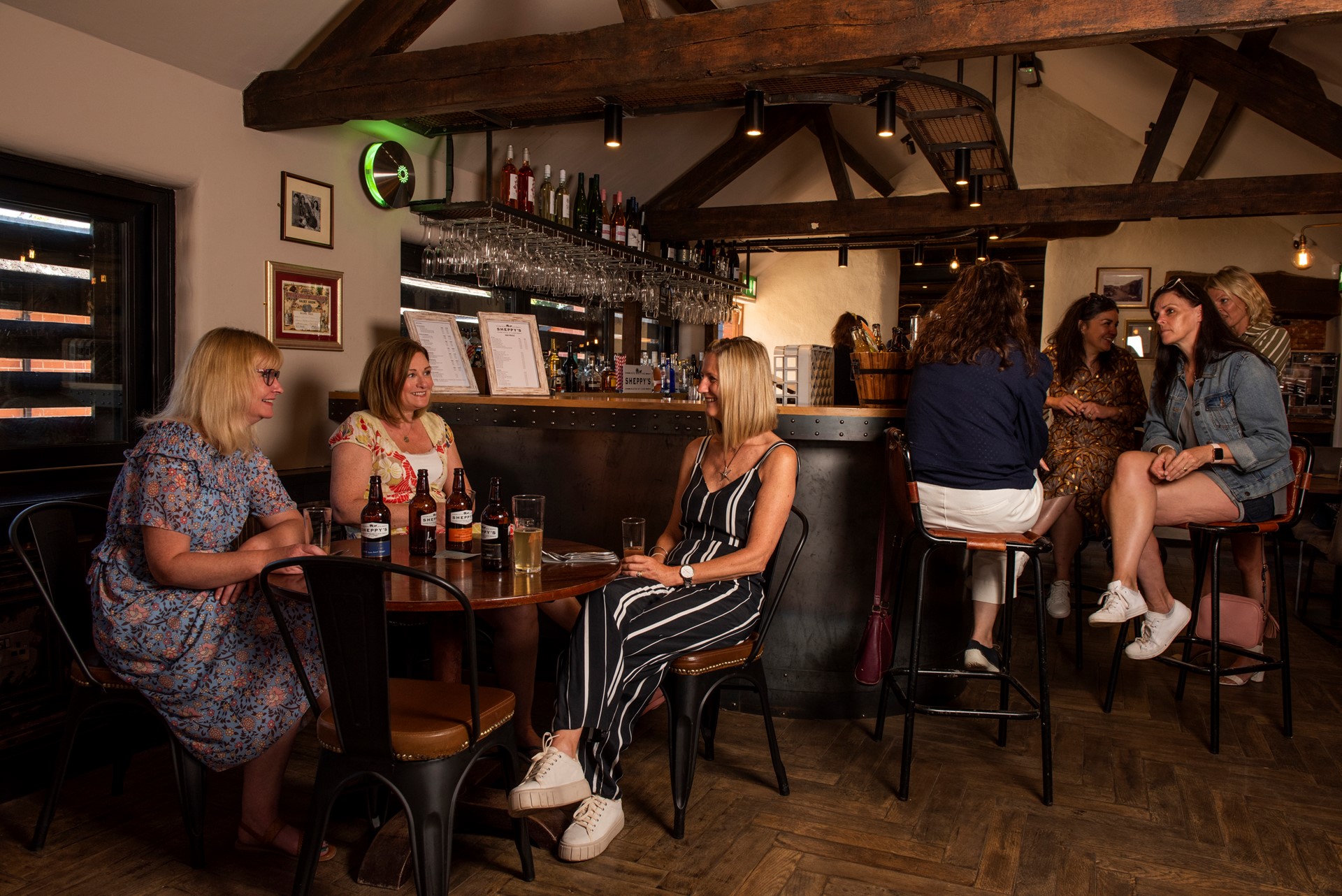
Blossom in spring, harvest from late August, cattle between the rows and ducks on the pond. The farm is open the way a farm should be: on foot, at your own pace, cider at the end.
acres of orchard at Three Bridges Farm
trees, standard and bush, fifteen acres traditional
tonnes of apples pressed as a seasonal harvest
acres certified organic, in the orchard planted in 1930
The walks
Three routes, waymarked from the yard.
The deli will pack a picnic to carry into the trees, decanted to plastic, because glass never enters an orchard. Dogs are welcome on leads on the blue route, though the orchards close to them from 17 August to the end of November for harvest.
The flyover is their own drone film; the hero loop above is licensed stock until the farm’s footage is cut for the web.
The living farm
Willows treat the water, bees keep the blossom.
In 2007 the farm cut a WET system into its clay: a chain of ponds planted with thousands of willows that absorb and break down the pressing season's effluent naturally. No tankers, and a habitat that now holds snipe, moorhens, swallows and warblers.
Beehives sit in chosen corners of the farm for pollination; orchard margins are left to seasonal wildflowers, and the ancient standard trees, oaks and willows carry redwings and fieldfares in winter, swallows in summer.
“At Three Bridges Farm, our farming environment is vital to our operations, and with a century of history behind us, ensuring a sustainable future is our main focus.” — David Sheppy
Groups & coach parties
Bring the whole outing.
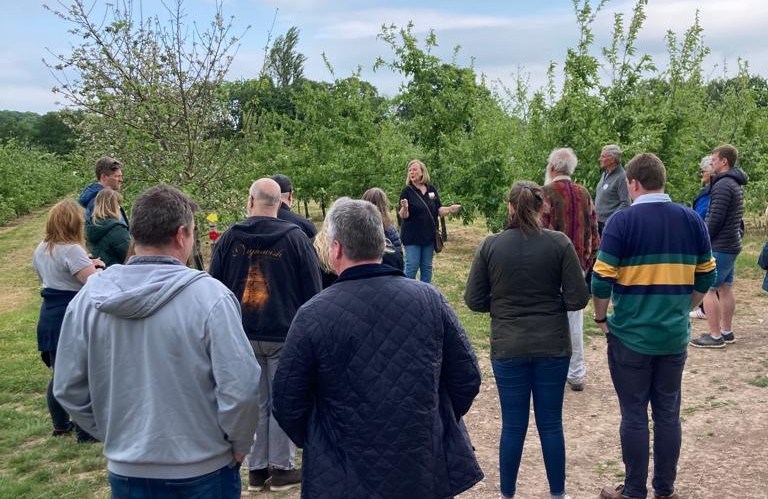
Tours run about ninety minutes with a dedicated guide: the orchards, the press house, the vat house and the Rural Life Museum, a film of the cider-making year, and a fully guided tasting to finish.
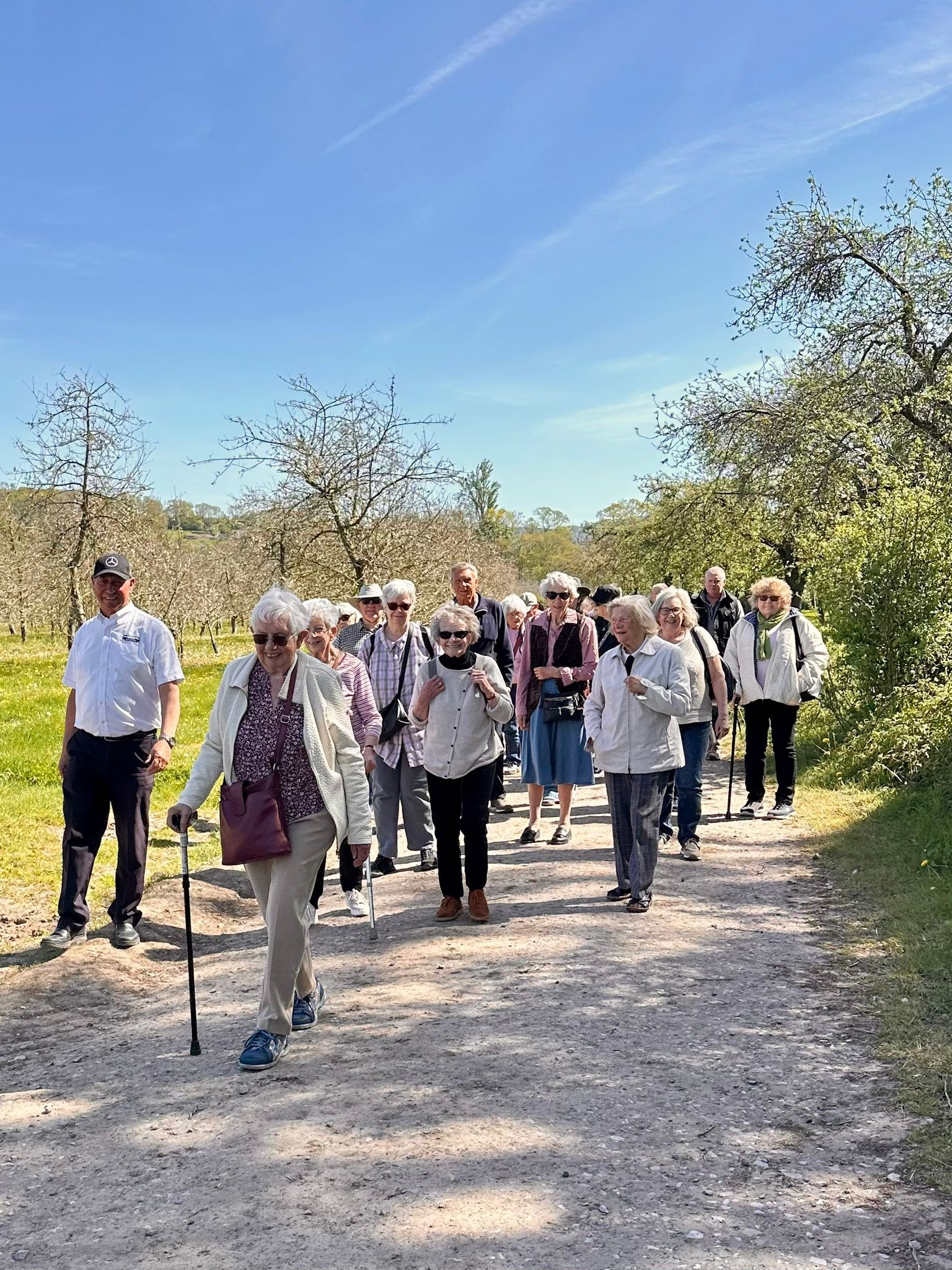
Coach parties and groups of fifteen or more are welcomed all year by arrangement, with a guide booked for you and the café ready at the end of the walk.
Getting here
On the A38, brown signs from the M5.
The record
Two hundred years, kept in ink.
The Rural Life Museum, opened by Richard and Mary in 1978, keeps the rest — including an 1859 receipt for butter and cream that the cheesemonger treats as a mandate.
Leave by a different door